



Space Weather Impacts
About Space Weather Impacts
Different types of space weather can affect different technologies at Earth. Solar flares can produce strong x-rays that degrade or block high-frequency radio waves used for radio communication during events known as Radio Blackout Storms. Solar Energetic Particles (energetic protons) can penetrate satellite electronics and cause electrical failure. These energetic particles also block radio communications at high latitudes in during Solar Radiation Storms.
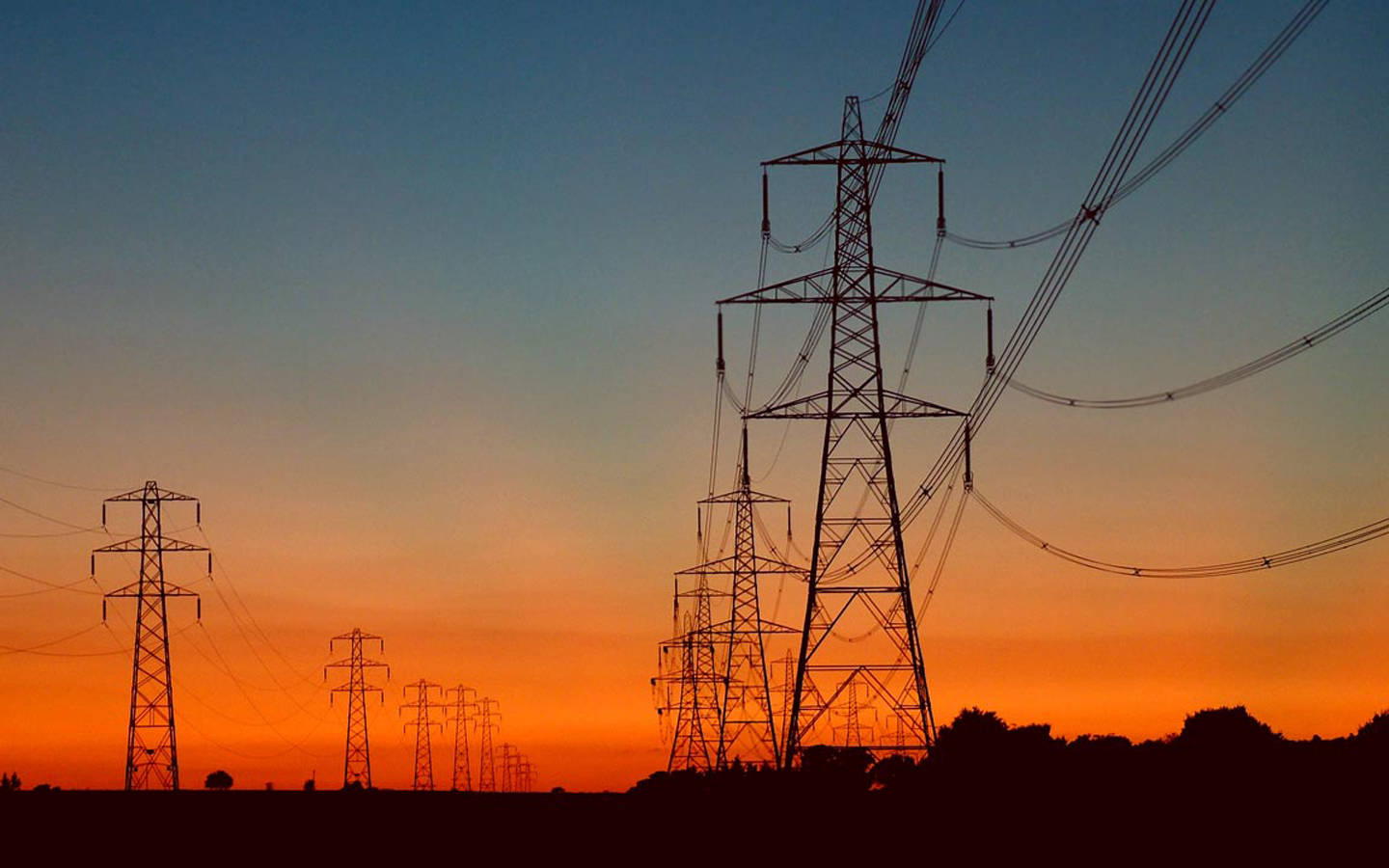
Coronal Mass Ejections (CMEs) can cause Geomagnetic Storms at Earth and induce extra currents in the ground that can degrade power grid operations.
Geomagnetic storms can also modify the signal from radio navigation systems (GPS and GNSS) causing degraded accuracy. Geomagnetic storms also produce the aurora. Space weather will impact people who depend on these technologies. A description of some of the space weather phenomena can be found at Space Weather Phenomena. Space Weather Phenomena.
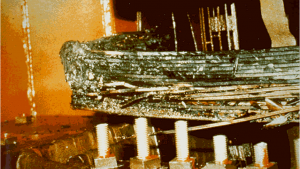
The electric power grid, and consequently the power to your home and business, can be disrupted by space weather. One of the great discoveries of the 19th century was the realization that a time-varying magnetic field is able to produce an electrical current in a conducting wire. The basic idea is that the time rate of change of the magnetic flux (i.e. lines of magnetic force) passing through a current loop is proportional to the current that is generated around the loop.
Space weather impacts radio communication in a number of ways. At frequencies in the 1 to 30 mega Hertz range (known as “High Frequency” or HF radio), the changes in ionospheric density and structure modify the transmission path and even block transmission of HF radio signals completely. These frequencies are used by amateur (ham) radio operators and many industries such as commercial airlines. They are also used by a number of government agencies such as the Federal Emergency Management Agency and the Department of Defense.
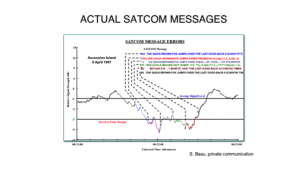
Satellite communication refers to any communication link that involves the use of an artificial satellite in its propagation path. Satellite communications play a vital role in modern life. There are over 2000 artificial satellites in use. They can be found in geostationary, Molniya, elliptical, and low Earth orbits and are used for traditional point-to-point communications, mobile applications, and the distribution of TV and radio programs.
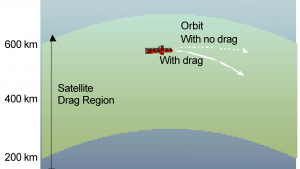
Drag is a force exerted on an object moving through a fluid, and it is oriented in the direction of relative fluid flow. Drag acts opposite to the direction of motion and tends to slow an object. As an example, think of running against a high wind and feeling the drag pushing you back in the direction of relative fluid flow. This same force acts on spacecraft and objects flying in the space environment. Drag has a significant impact on spacecraft in low Earth orbit (LEO), generally defined as an orbit below an altitude of approximately 2,000 kilometers (1,200 mi).
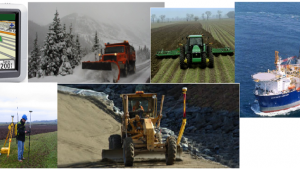
The use of single and dual frequency satellite radio navigation systems, like the Global Positioning System (GPS), has grown dramatically in the last decade. GPS receivers are now in nearly every cell phone and in many automobiles, trucks, and any equipment that moves and needs precision location measurements. High precision dual frequency GPS systems are used for farming, construction, exploration, surveying, snow removal and many other applications critical to a functional society.